
The Structural Failure Behind the Minnesota Fraud Scandal
How a 20th-Century Oversight System Failed a 21st-Century Fraud Problem

The most persistent misunderstanding about the Minnesota fraud scandal is that it reflects a failure to uncover fraud. It does not. State agencies flagged implausible growth, anomalous billing patterns, and persistent compliance failures early and repeatedly. These warnings were documented, escalated, and acted upon. The deeper failure lay in the design of the system itself: a documentation-based trust model optimized for speed, not verification, combined with delegated oversight and weak legal authority. Minnesota showed how a system can technically comply with process while remaining structurally incapable of distinguishing paper compliance from real service delivery. It also showed how tightly the agencies’ hands are tied when it comes to stopping payments once fraud risk is clear.
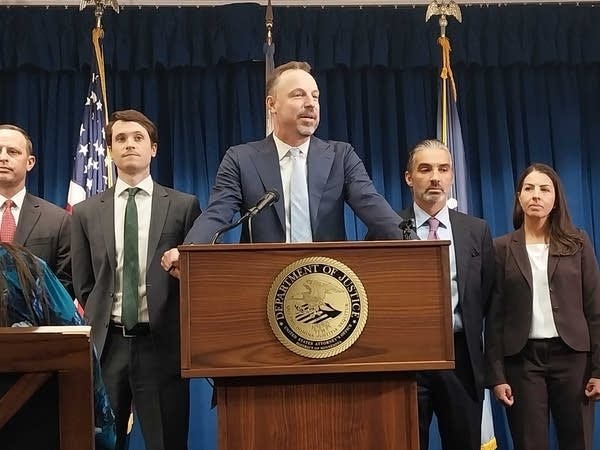
Minnesota revealed a structural weakness that runs far deeper than any single nonprofit or program. When agencies tried to slow or pause payments based on documented fraud risk, they lacked clear legal footing to do so. In the absence of explicit statutory authority to pause disbursements based on risk alone, courts defaulted to procedural standards designed for a different era. The result was a paradox: the act of trying to stop fraud triggered lawsuits that compelled continued payment.
That dynamic should trouble anyone who is serious about program integrity.
If there is one reform that matters more than all others, it is this: agencies administering public funds must have clear, court-defensible authority to temporarily pause payments when credible fraud risk is documented. Not terminate programs. Not adjudicate guilt. Simply pause the flow of funds long enough to review risk signals without being forced to choose between paying blindly and violating due process.
Closely related is the need to rebalance how emergency programs are designed. Over the past decade—and especially during COVID—speed became the dominant policy objective. Funds were pushed out quickly, verification was deferred, and overpayment was treated as a problem to be cleaned up later. That tradeoff was often made in good faith, but it had predictable consequences. Fraud networks are highly adaptive. Emergency funding always has to move quickly, but speed can no longer be allowed to eclipse baseline controls that protect taxpayer dollars in real time.
One thing we have learned: when speed is prioritized, bad actors who know how to exploit documentation-based trust systems steal a lot of money.
Minnesota also exposed how easily civil litigation can be weaponized as a fraud tactic. When oversight tightened, providers—the same providers who’ve now been indicted for massive fraud—sued.
Courts, constrained by statutory design, focused on whether agencies had followed every procedural step rather than on the substance of fraud risk. Injunctions followed, and money was allowed to continue to flow. This was the predictable outcome of laws that provide no fraud risk standard for courts to apply. Congress and agencies need to correct that imbalance by giving judges an explicit statutory framework that allows them to weigh documented fraud risk, not just administrative process, when evaluating requests to compel payment.
Equally important is the need to move beyond paper compliance as the primary safeguard. Minnesota demonstrated, yet again, that documentation is not verification. Forms can be complete, certifications can be signed, and invoices can look facially valid while the underlying activity is fictional.
At scale, document-based systems collapse under their own weight. Modern oversight must institutionalize data-driven techniques such as volume plausibility checks, network analysis, and anomaly detection. These analytics need to be routine, pre-payment controls. The tools already exist and are widely used in other sectors. Actionable analytics must be the default in all public benefits and grants programs.
The scandal also underscored the limits of delegated oversight. Federal programs increasingly rely on states, nonprofits, and intermediaries to administer funds, but authority has not kept pace with responsibility. States bear compliance risk, fraud losses accrue federally, and enforcement power is fragmented across agencies and timelines. Delegation without enforceable stop-the-money authority is abdication. Oversight must be paired with the power to act decisively when risk is identified.
Another critical reform is the need to structurally separate beneficiary continuity from provider payment entitlement. Fraud actors repeatedly framed enforcement actions as threats to vulnerable populations, collapsing two very different questions into one. Ensuring that children are fed or families are housed does not require guaranteeing immediate payment to any specific provider under investigation.
Programs must be designed with contingency mechanisms that protect beneficiaries while allowing payment pauses or segmentation when providers present elevated risk. Without that separation, fraudsters retain moral and legal leverage that distorts oversight decisions. To many, this was an especially galling aspect of the Minnesota fraud scandal.
Finally, Minnesota reminds us that criminal prosecutions, while necessary, are not prevention tools. Indictments came years later, long after funds were disbursed and warnings were raised. Prosecution is a back-end accountability mechanism, not a real-time control. Systems that rely on law enforcement to correct design flaws after the fact are systems that have already failed.
Taken together, these reforms point to a simple but uncomfortable conclusion: Minnesota was a case study in what happens when emergency funding, delegated administration, document-based trust, and weak legal authorities collide. The scandal did not arise because public servants were inattentive or unskilled. It arose because the system made it institutionally safer to keep paying than to stop.
Until that incentive structure changes—until acting on fraud risk is legally protected, operationally supported, and analytically enabled—the next crisis will produce the same outcome.